Blog
Tips, tutorials, and news about real-time transcription
Language Skills Increase International Internship Chances 3× (2026)
International internships can launch your global career — but competition is fierce. Language skills are the single biggest differentiator. Here is how to build them strategically and stand out in every application.

7 Proven Foreign Language Negotiation Tactics (2026 Guide)
Negotiating in a foreign language is a high-stakes professional challenge. Discover a research-backed framework that helps bilingual professionals overcome communication barriers and close 31% more international deals.
Language Certifications That Boost Careers
Not all language certificates carry equal weight in the global job market. Learn which certifications employers actually value, how to pick the right test, and smart strategies to prepare — without spending a fortune.

Home Language Immersion: 7 Proven Habits (2026)
You don't need a plane ticket to immerse yourself in a new language. Discover 7 daily habits that transform your home into a language lab — backed by neuroscience and practical for any schedule.
Multilingual Freelancers Earn 30% More in 2026
Data from Payoneer shows multilingual freelancers earn 30% more on international platforms. Discover how language proficiency transforms freelance careers — from winning global clients to commanding premium rates.

Why Learn a Foreign Language? 7 Life-Changing Benefits
From sharper thinking and higher salaries to global career access, here are 7 research-backed reasons why learning a foreign language is the most valuable skill you can build in 2026.
Language Learning for Busy Professionals: 5 Smart Strategies
A research-backed guide for busy professionals to fit language learning into a packed schedule, leveraging micro-learning, immersion techniques, and real-time captioning for real progress.
Language Skills for International Networking: 6 That Build Global Careers
Speaking another language is only the beginning. Language skills for international networking — from culturally-aware small talk to professional follow-ups — are what turn casual contacts into lasting global relationships. Here are 6 specific skills backed by research and real-world hiring data.

7 Proven Strategies to Ace a Foreign Language Job Interview
Job interviews are stressful enough in your native language. When you add a foreign language to the mix, cognitive load doubles and anxiety spikes. Here are 7 proven strategies — backed by neurolinguistic research and hiring data — to prepare, build confidence, and succeed in any foreign language job interview.
5 Cross-Cultural Communication Skills That Drive Global Career Success
Speaking the language is only half the battle. Discover the five cross-cultural communication skills that separate professionals who thrive internationally from those who struggle — and how to build them through everyday content.
Bilingual Employees Earn 19% More in 2026 (New Data)
In 2026, 90% of U.S. employers rely on multilingual workers and bilingual employees earn 19% more on average. Here is which languages are most in demand and how to build the fluency that pays off.
How Reading Changes the Brain (2026 Study)
A landmark 2026 study reveals that learning to read fundamentally changes how your brain processes spoken words — even without text present. Here is what this means for language learners and why live captions may be the most underrated brain training tool available today.
Multilingual Relationships: How Language Shapes Love (2026 Research)
Multilingual relationships come with unique challenges — and extraordinary rewards. From saying “I love you” in a second tongue to navigating cultural nuances in conflict, here is what neurolinguistic research reveals about how language shapes love and emotional connection.
5 Bilingual Brain Benefits Backed by Neuroscience (2026 Research)
Your brain physically changes when you learn a second language. From increased gray matter to delayed Alzheimer’s onset, here is what peer-reviewed research reveals about the remarkable cognitive benefits of bilingualism — and how technology makes it more accessible than ever.
Remote Work Language Barriers: Solutions for Multilingual Teams
54% of employees face language barriers at work, and distributed teams lose up to 25% productivity from miscommunication. Real-time transcription and intentional communication practices are changing how multilingual teams collaborate.

Your Brain’s First 100 Days in a New Country — What Neuroscience Reveals About Language Immersion
Your brain starts changing within the first week of living abroad. From gray matter growth to rewired neural pathways, here is what peer-reviewed neuroscience reveals about the invisible transformation happening inside your head during the first 100 days in a new country.
Online Courses in Any Language with AI Subtitles
The world's best professors are already teaching online — but 40% of the global population lacks access to education in their first language. AI-powered real-time subtitles are changing that.
Learn a Language by Watching Movies — What Research Actually Says
A National Bureau of Economic Research study found that countries using subtitles instead of dubbing score significantly higher in English proficiency. Here is the research behind learning a language by watching movies — and how to apply it effectively.
Multilingual Family Video Calls — A Research-Backed Guide
The WHO estimates loneliness contributes to over 871,000 deaths per year. For multilingual families, language barriers make isolation worse. This guide covers the research, the tools, and practical strategies for meaningful cross-language family calls.

Watch Foreign Films with AI Real-Time Subtitles
The golden age of world cinema is here — but language barriers keep 80% of it locked away. AI-powered real-time subtitles are changing that forever.

Gaming Stream Live Subtitles: Watch Any Language
Esports will reach 641 million viewers by 2025, but most gaming content is locked behind language barriers. Real-time AI subtitles are changing how we watch streams.
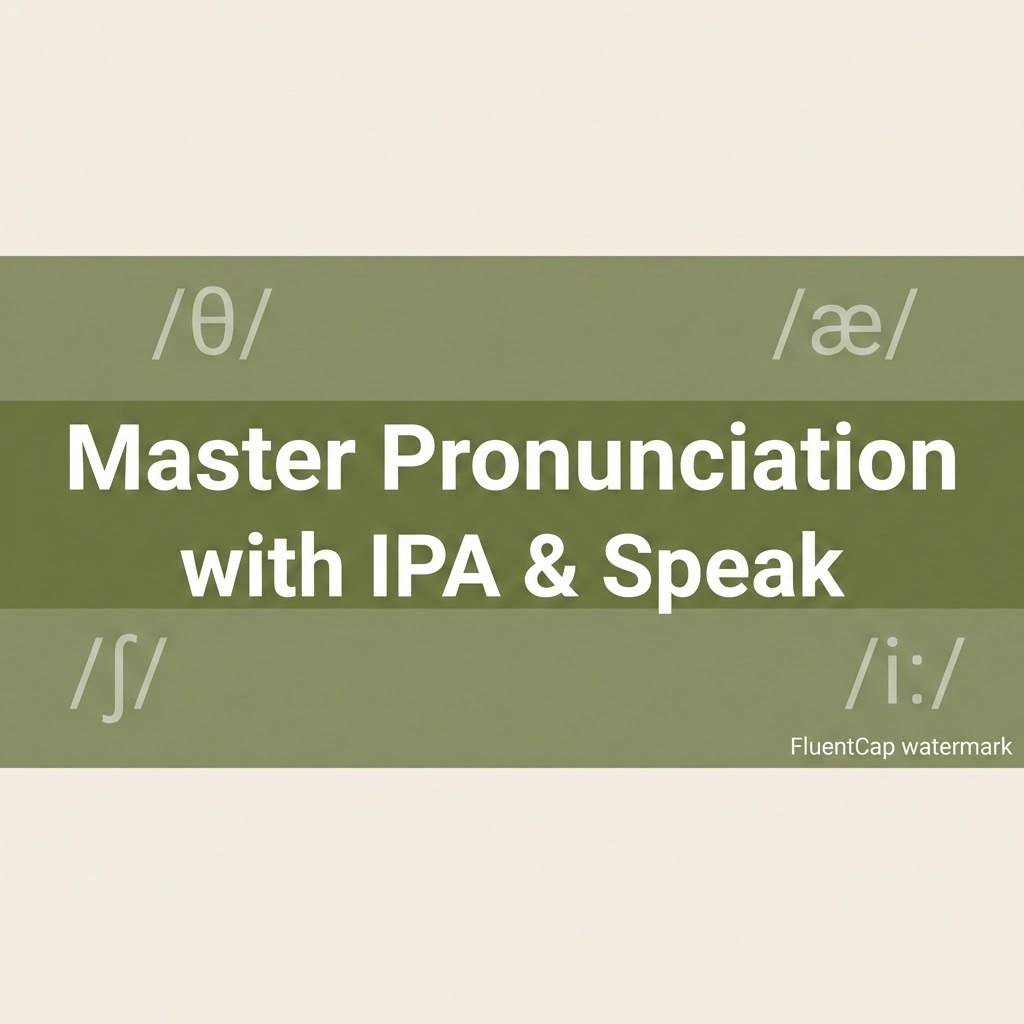
Pronunciation Practice with IPA & Speak
Mispronunciation is the hidden wall between you and real comprehension. If you pronounce a word wrong, you will not recognize it when a native speaker says it. FluentCap IPA and Speak tools fix this.
Accessibility Tech in 2026: Captions for All
Smart glasses with live subtitles, airports streaming announcements to hearing aids — 2026 is the year accessibility tech goes mainstream. Here is how you can get real-time captions on your computer right now, for free.

Best Free Speech-to-Text Tools in 2026
Speech-to-text technology has never been more accurate or more affordable. In 2026, top providers offer hundreds of free hours to get started. Here is how to choose.

Learn Japanese Through Anime Immersion
Over 80% of Japanese language learners say anime introduced them to the language. A 2025 study confirms what millions already knew: anime is one of the most effective paths to Japanese fluency.
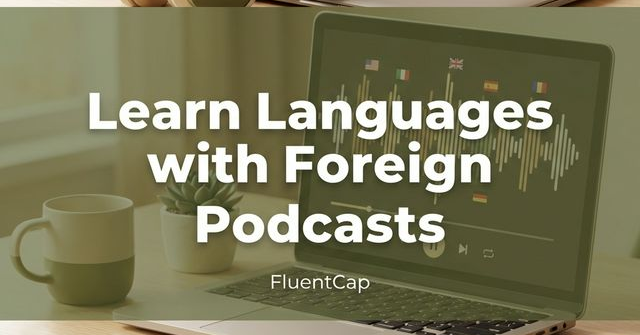
Learn Languages with Foreign Podcasts
Over 500 million people listen to podcasts weekly — but most foreign podcasts have no subtitles. Here's how to add real-time captions to any podcast and turn passive listening into active language learning.
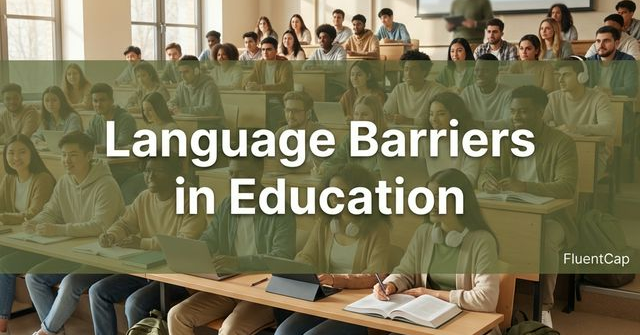
Language Barriers in Education: How Tech Bridges the Gap
A 2025 UNESCO report reveals that 40% of the global population lacks access to education in a language they understand. Here is how technology is changing that reality for millions of students.
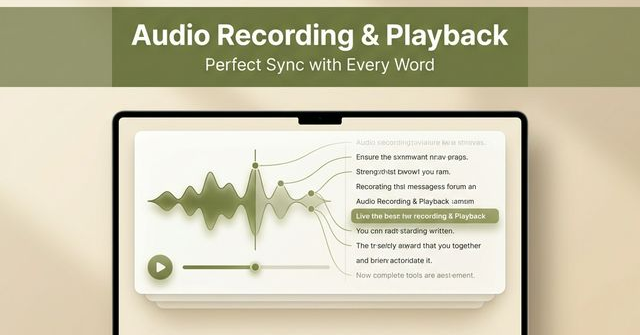
Audio Transcription Playback with Synced Transcript (Click to Jump)
Capture every word, replay anytime. FluentCap automatically records audio during transcription sessions, with bi-directional sync that lets you click any sentence to hear it, or watch the transcript highlight as audio plays.

Discover World Cultures Through Native Content (Without Language Barriers)
The best way to understand a culture is through its original voice. Explore Japanese festivals, German documentaries, Latin American music, and more — in their native languages, with FluentCap making every word accessible.

Foreign Audiobooks with Live Subtitles — Transcribe Any Audiobook
Audiobooks are a goldmine for language learning — but without subtitles, understanding native narration can be overwhelming. Here's how to add real-time captions to any audiobook on your computer.
Comprehensible Input: The Science-Backed Way to Learn English Naturally
Why do some people spend years studying English grammar but still struggle to understand native speakers? The answer lies in comprehensible input — the research-backed approach that transforms how you learn English.
Highlight Feature: Save Important Moments in Transcripts
Never lose important moments again. FluentCap's Highlight feature lets you mark, organize, and navigate to key points in your transcripts — perfect for language learning, research, and meeting notes.

English Interview Confidence | Live Captions
Job interviews are stressful enough without worrying about language barriers. Learn how real-time transcription can boost your English interview confidence.
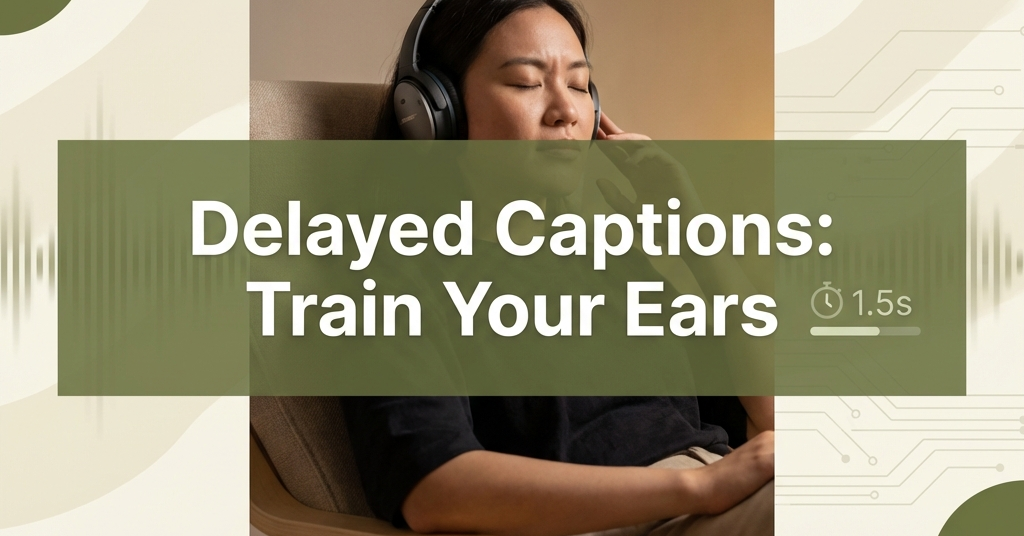
Delayed Captions: Train Active Listening Skills
Discover the counterintuitive technique that language researchers swear by: delaying captions by 1-1.5 seconds forces your brain to listen first, then confirm — dramatically improving listening comprehension.

Learn Language Before Travel: Virtual Immersion at Home
Transform your pre-trip preparation with virtual language immersion. Learn to understand foreign news, cultural content, and local media before you even board the plane.
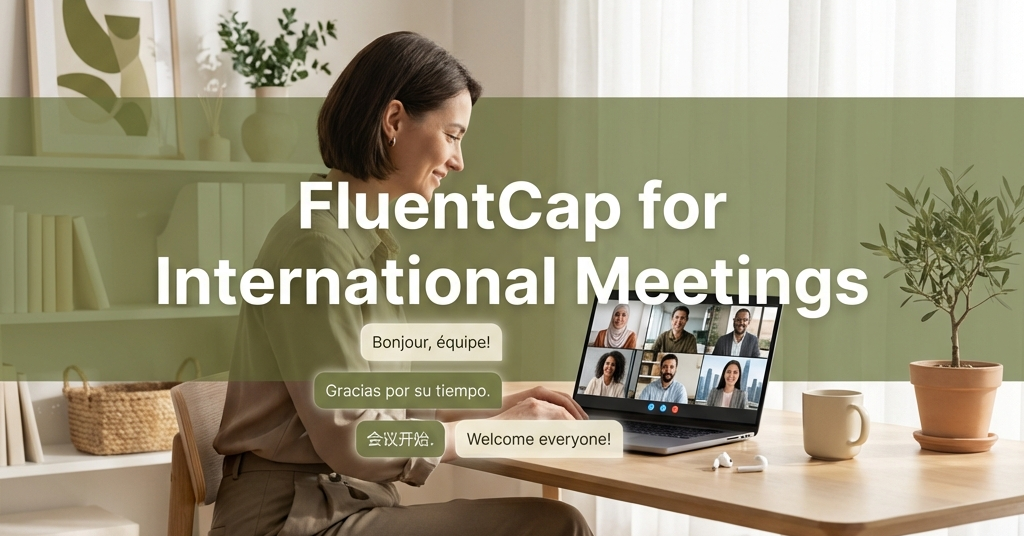
FluentCap for International Meetings | Live Captions
Never miss a word in your global team meetings. FluentCap provides real-time transcription and translation for any video call — Zoom, Teams, Google Meet, and more.
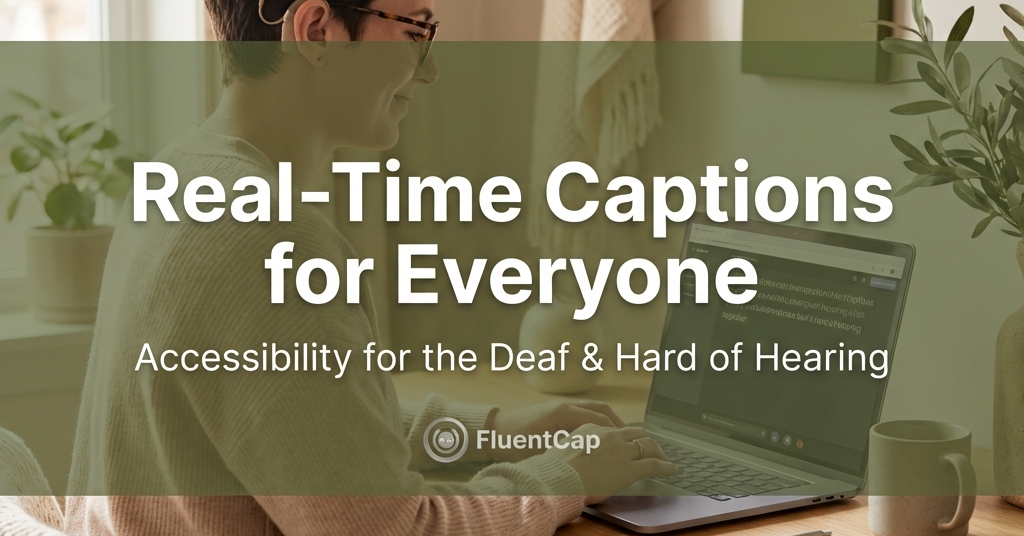
Real-Time Captions for Deaf & Hard of Hearing | FluentCap
FluentCap brings real-time captions to everyone who needs them — making conversations, movies, meetings, and everyday audio accessible for the deaf and hard-of-hearing community.

Introducing FluentCap: Transcription for Everyone
We built FluentCap with a simple belief: language should never be a barrier to understanding, learning, or connecting with others.